


DIY First Aid Kit for Campers: Your Essential Guide to Wilderness Safety
- nlschuman
- Jul 21, 2025
- 5 min read
Be Ready for the Unexpected—Build Your Own First Aid Kit for the Great Outdoors
Camping offers an unparalleled opportunity to disconnect from the noise of daily life and reconnect with the serenity of nature. But while the crackle of a campfire and the whisper of wind through pines are often highlights, the unpredictability of the wild means being prepared is not just prudent—it's essential. One of the most vital pieces of gear you can pack is a well-stocked first aid kit, tailored specifically for the challenges and minor mishaps that can arise during outdoor adventures.
In this blog post, we’ll lead you through the process of creating your own DIY first aid kit for camping, discuss customizing your kit matters, and provide practical tips to ensure you never find yourself unprepared, no matter where the trail leads.
Why a DIY First Aid Kit?
Walk into any outdoor store, and you’ll find rows of prepackaged first aid kits, each promising to be the perfect “one-size-fits-all” solution. But the truth is, every camper is different, and so is every trip. Your needs will vary depending on your destination, group size, medical conditions, and the activities you have planned. By building your own kit, you ensure that everything inside is useful, familiar, and tailored to you.
Assessing Your Needs
Before you start gathering supplies, take a few moments to consider:
· Trip Duration: Are you out for a weekend or several weeks?
· Location: How remote is your campsite? Will help be hours—or days—away?
· Number of Campers: More people means more supplies.
· Special Medical Needs: Does anyone have allergies, chronic illnesses, or require special medications?
· Activities: Will you be hiking, swimming, climbing, or engaging in other high-risk adventures?
Jot these details down; they’ll help you decide what to include and how much of each item you’ll need.
Essential Components of Your DIY First Aid Kit
Here’s a comprehensive list of what your kit should contain, with explanations for each item. Remember to personalize this list based on your unique needs.
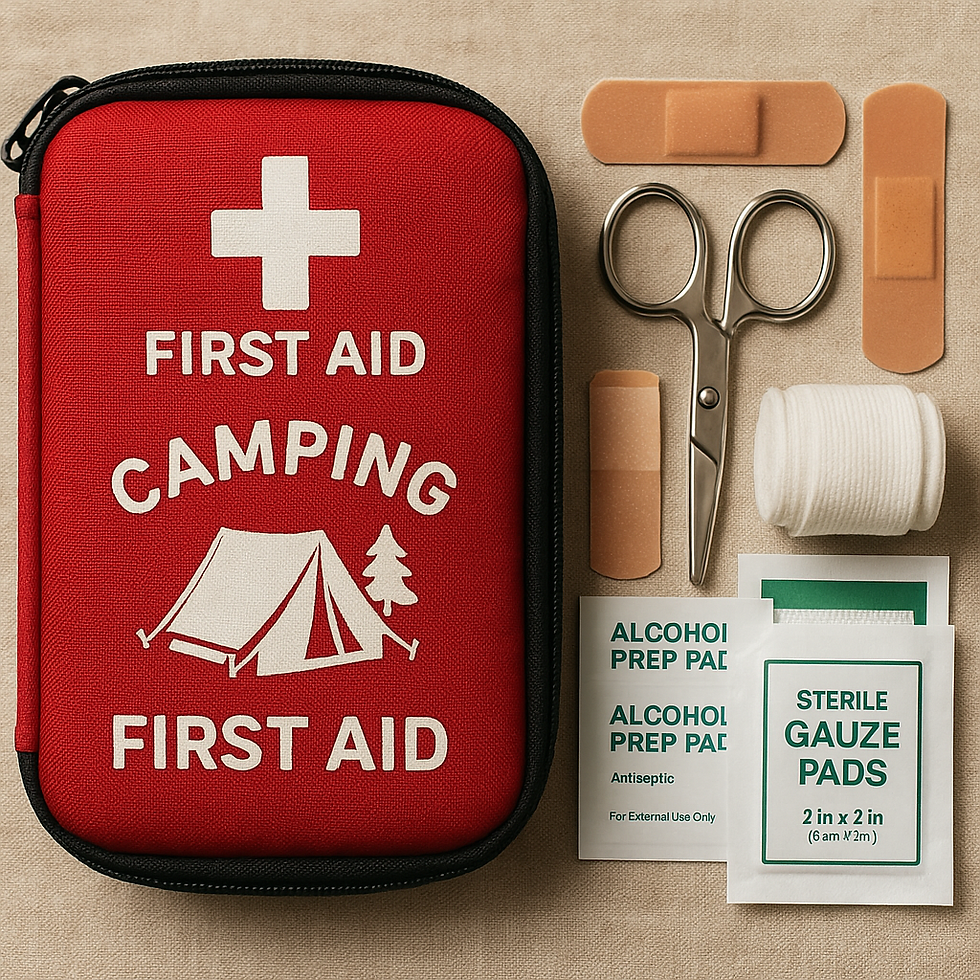
1. Wound Care and Bandaging Supplies
· Adhesive Bandages (various sizes): For small cuts, blisters, and scrapes.
· Sterile Gauze Pads and Roll: To dress larger wounds and control bleeding.
· Medical Tape: To secure bandages and dressings.
· Antiseptic Wipes or Solution: Clean wounds and prevent infection.
· Antibiotic Ointment: A thin layer on cuts reduces infection risk.
· Moleskin or Blister Pads: Hiking often leads to blisters; prevention is key.
· Butterfly Closures or Steri-Strips: For closing small lacerations.
2. Medications
· Pain Relievers: Ibuprofen, aspirin, or acetaminophen for headaches and soreness.
· Antihistamines: For allergic reactions or hay fever.
· Anti-diarrheal Tablets: Sudden stomach issues can derail a trip.
· Motion Sickness Medication: If traveling by boat or winding roads.
· Personal Prescriptions: Enough for the duration, plus a backup.
· Hydrocortisone Cream: For rashes or insect bites.
3. Tools and Instruments
· Small Scissors: For cutting tape, bandages, or clothing.
· Tweezers: For removing splinters or ticks.
· Safety Pins: Multi-use for slings, bandages, or gear repairs.
· Thermometer: Compact digital types are best.
· Disposable Gloves: Protects both patient and responder.
· CPR Face Shield: For safe resuscitation attempts.
4. Burn and Bite Care
· Burn Cream or Gel: For minor burns from campfires or stoves.
· Aloe Vera Gel: Soothes sunburns.
· Insect Sting Relief Pads: Reduces itching and swelling.
5. Environmental Protection
· Sunscreen: Broad spectrum SPF 30+ recommended.
· Lip Balm with SPF: Protects against chapped, sunburned lips.
· Insect Repellent: Especially in mosquito-heavy areas.
· Emergency Blanket: Retains body heat in a pinch.
6. Additional Useful Items
· First Aid Manual or Quick Guide: Even seasoned campers forget under pressure.
· Notepad and Pencil: To record symptoms, times of injury, or important notes for responders.
· Water Purification Tablets: For emergencies when your filter fails.
· Duct Tape: The ultimate multi-purpose item; patch gear or make an emergency splint.
Packing and Organization Tips
A first aid kit is only as useful as it is accessible and organized. Use a waterproof, durable pouch or case, and organize contents in clear zip-lock bags or labeled compartments. Consider color-coding items (e.g., red for wound care, blue for medications) for quicker identification.
Regularly check expiration dates and conditions of all items. After each trip, restock what’s been used, and refresh anything that’s near expiry.
Special Considerations for Campers
· Allergies and Anaphylaxis: If anyone in your group is at risk of severe allergic reactions, include at least one epinephrine auto-injector and know how to use it.
· Children: Adjust medication dosages and supplies accordingly. Include child-friendly bandages and remedies.
· Pets: If your furry friends are part of the adventure, pack tweezers, vet-approved medications, and pet-specific bandages.
Training: A Critical Companion
No kit can replace know-how. Invest in a basic first aid and CPR course before your trip. Familiarize everyone in your group with the kit’s contents and their uses. Practice scenarios so that, if the time comes, you’ll be ready to act swiftly and calmly.
Personalizing Your Kit
As you gain camping experience, you’ll learn what you use most—and what you don’t. After each trip, review and revise your kit. Perhaps you found a certain tape irritating, realized you needed more blister care, or discovered someone in your group is sensitive to a particular medication. The more personalized your kit, the more effective it will be.
Sample Packing List
Here’s a quick checklist you can use as a starting point:
· Adhesive bandages (assorted sizes)
· Sterile gauze pads and rolls
· Medical tape
· Antiseptic wipes/solution
· Antibiotic ointment
· Moleskin/blister pads
· Butterfly closures
· Pain relievers
· Antihistamines
· Anti-diarrheal medication
· Hydrocortisone cream
· Personal prescriptions
· Small scissors
· Tweezers
· Safety pins
· Digital thermometer
· Disposable gloves
· CPR face shield
· Burn cream/gel
· Aloe vera gel
· Insect sting relief pads
· Sunscreen
· Lip balm with SPF
· Insect repellent
· Emergency blanket
· First aid manual
· Notepad and pencil
· Water purification tablets
· Duct tape
Final Thoughts: Safety is Self-Reliance
Building your own first aid kit is about more than just supplies. It’s an act of self-reliance, a way to ensure you’re ready to handle life’s little (or not-so-little) surprises in the backcountry. It empowers you to help yourself and others, and gives you peace of mind so you can fully enjoy the beauty of nature.
Next time you’re planning an escape into the wild, set aside some time to assemble your kit. You may never need it, but if you do, you—and your fellow campers—will be grateful you took the time to prepare.
Happy camping and
stay safe!


Comments